
When selecting an artificial turf system for elite sports, schools, training facilities, or community fields, buyers often ask the same question:
What makes one turf system safer and higher performing than another?
The answer goes far beyond appearance. The safest, highest-performance artificial turf systems are engineered to balance player safety, traction, shock absorption, durability, and sport-specific performance—while meeting strict international testing standards.
This guide explains what defines a top-tier turf system and how to evaluate the safest option for your facility.
What “Safe and High Performance” Means in Artificial Turf
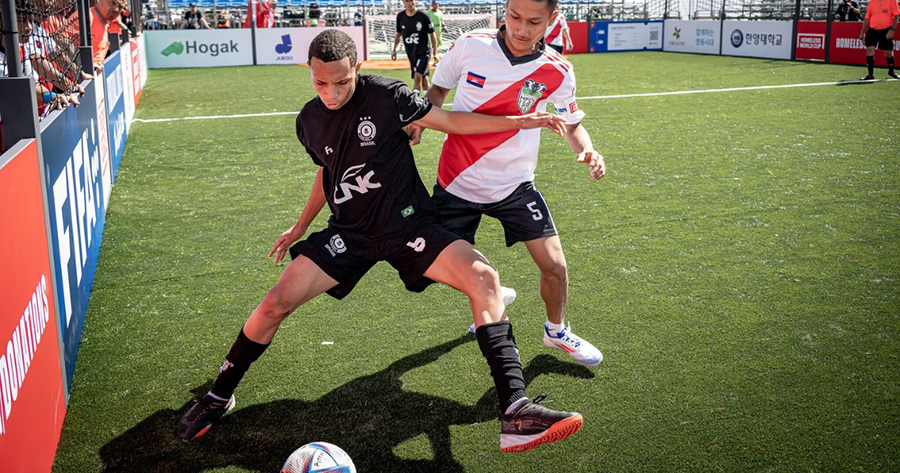
A premium turf system should deliver performance that closely replicates—or improves upon—well-maintained natural grass while minimizing injury risk.
Key characteristics include:
- Consistent traction and rotational resistance
- Proper shock absorption and impact attenuation
- Stable footing during acceleration and cuts
- Predictable ball response
- Surface temperature management
- Reduced abrasion and skin friction
- Long-term performance retention under heavy use
1. Shock Absorption and Impact Protection
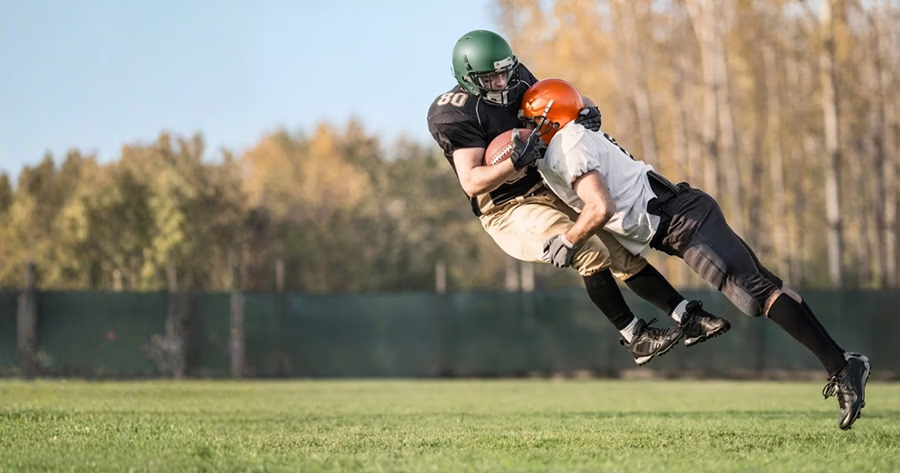
One of the most important safety factors is how well the turf absorbs impact.
High-performance turf systems use engineered underlayers and infill systems to reduce stress on athletes’ joints and lower the severity of falls.
Look for systems tested for:
- g-max / Head Injury Criteria (HIC) performance
- Vertical deformation
- Force reduction
- Energy restitution
These metrics help indicate how the surface behaves under impact and repeated athletic movement.
2. Traction That Balances Grip and Releas
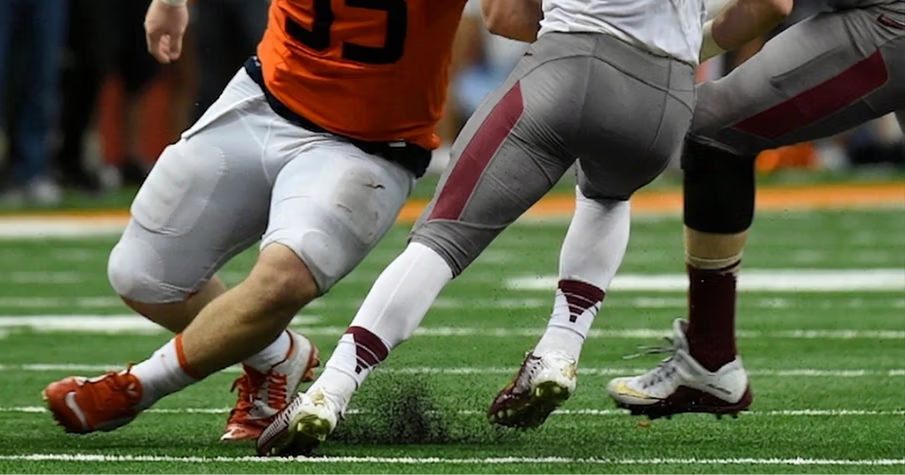
Too much traction can increase joint stress. Too little traction can lead to slips and instability.
The safest turf systems are engineered to provide balanced rotational resistance, allowing athletes to:
- Cut confidently
- Pivot safely
- Maintain acceleration without excessive foot lock
This is particularly important for sports such as:
- Football
- Soccer
- Rugby
- Lacrosse
3. Fiber Technology Matters
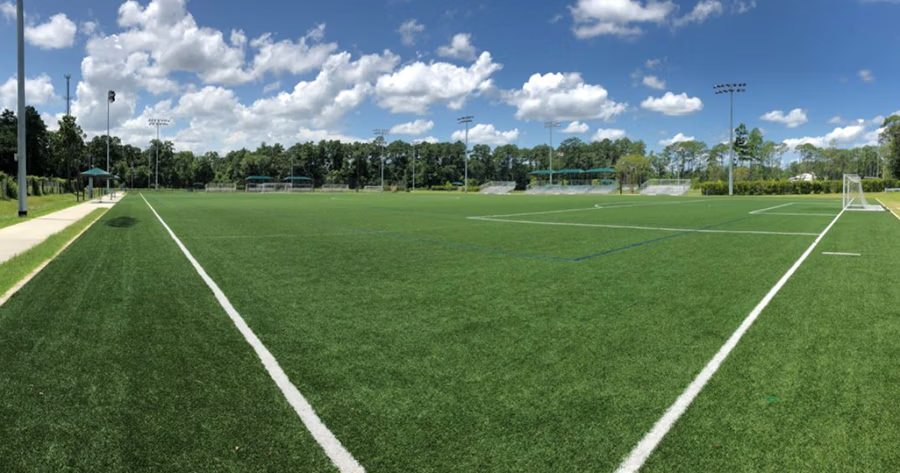
Not all turf fibers perform equally.
High-end turf systems often use advanced yarn technology designed for:
- Improved softness and comfort
- Enhanced resilience after compression
- Better cleat interaction
- Reduced skin abrasion
Premium monofilament fibers generally provide:
- Better recovery
- Improved aesthetics
- Enhanced durability
4. Infill Selection Impacts Safety
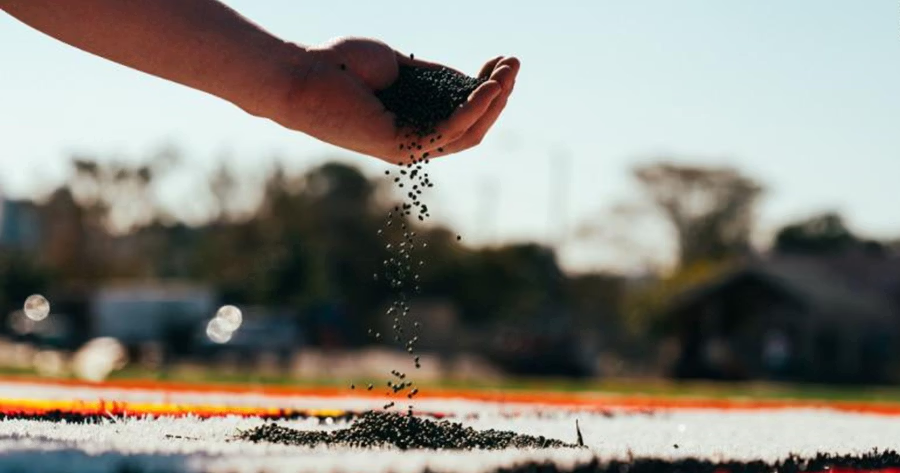
Infill contributes significantly to both safety and performance.
Common options include:
Crumb Rubber
- Widely used
- Strong shock absorption
- Budget-friendly
Organic / Natural Infill
- Better heat performance
- More environmentally friendly
Coated / Advanced Performance Infill
- Enhanced cooling
- Improved cleanliness
- Consistent play characteristics
Choosing the right infill depends on:
- Climate
- Sport type
- Usage intensity
- Maintenance capabilities
5. Heat Mitigation for Player Safety
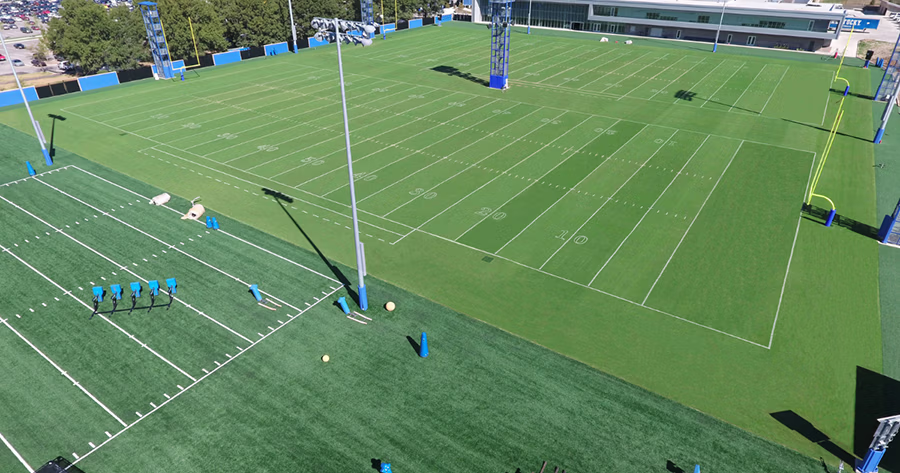
Artificial turf can become hotter than natural grass in direct sunlight.
Modern high-performance systems address this through:
- Cooling infill technologies
- Heat-reflective fiber pigments
- Irrigation/cooling systems
- Organic infill blends
Heat management is especially important in:
- Southern U.S. states
- Middle East climates
- High-exposure training facilities
6. Certification and Independent Testing
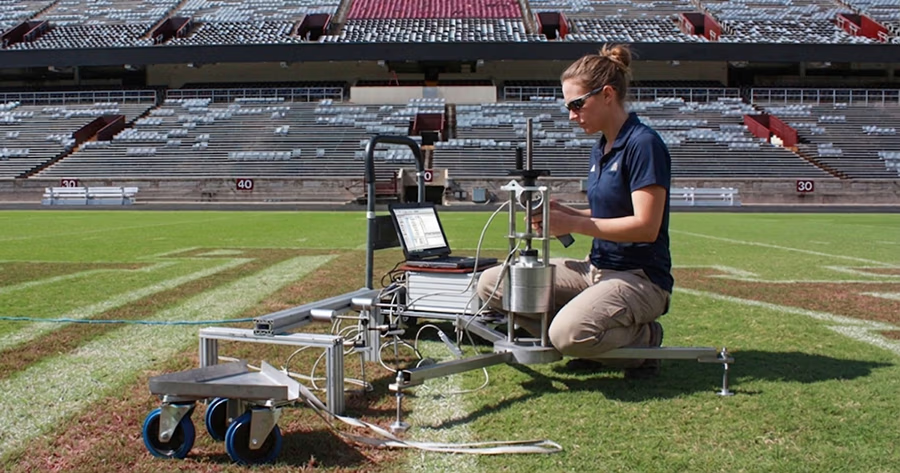
The safest turf systems are validated by recognized testing bodies.
Look for compliance with standards such as:
- FIFA Quality / Quality Pro
- World Rugby standards
- EN / ASTM testing protocols
- Independent laboratory performance reports
Certification demonstrates that a turf system meets objective benchmarks for safety and performance.
7. System Design Matters More Than Turf Alone
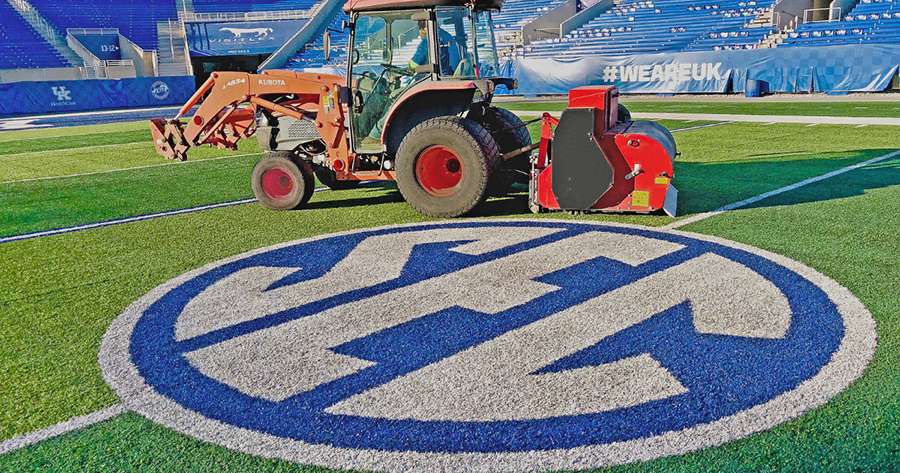
A turf field is not just the carpet.
Performance depends on the complete system:
- Turf fiber
- Backing construction
- Infill
- Shock pad
- Base preparation
- Drainage system
Even premium turf can underperform if installed over a poorly designed base.
How to Evaluate the Right Turf System
When comparing turf manufacturers, ask:
- What independent safety/performance testing is available?
- Is the system certified for my sport?
- What is the g-max / force reduction rating?
- How does the turf manage heat?
- What is the expected lifespan under heavy use?
- What maintenance is required to retain performance?
Why Premium Turf Systems Deliver Better Long-Term Value
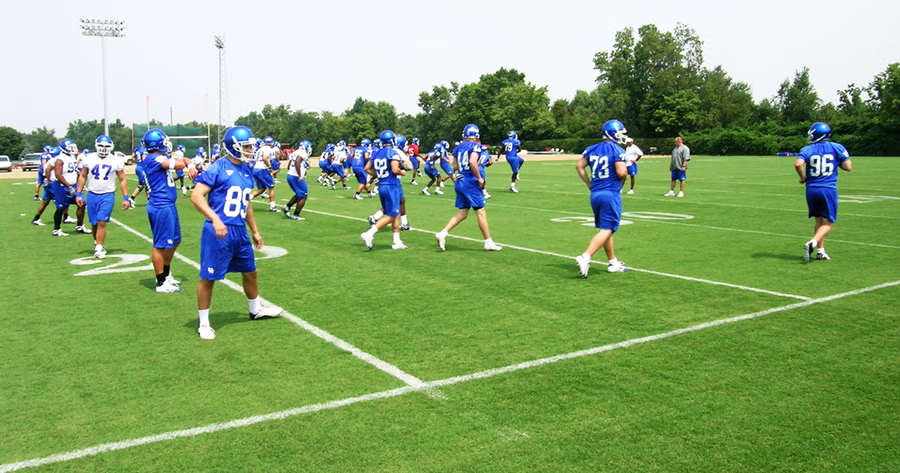
While lower-cost turf may reduce upfront spend, premium systems often provide:
- Longer usable lifespan
- Better athlete safety outcomes
- Lower long-term maintenance costs
- Stronger warranty coverage
- Better retention of play characteristics over time
For facilities with high athlete traffic, safety and performance should outweigh initial price alone.
Final Thoughts
The safest, highest-performance artificial turf systems are those engineered as complete athletic surfaces—not just synthetic grass.
When properly designed, tested, and installed, modern turf can provide:
- Elite-level playability
- Enhanced athlete safety
- Consistent year-round performance
- Long-term durability and ROI
Choosing the right turf partner means selecting a manufacturer that prioritizes science, testing, certification, and real-world athletic performance.
